

A patient messages a clinic asking about a follow-up scan. The person who replies has no record of the last three conversations, the medication change from two weeks ago, or the fact that this patient already asked the same question on a different channel.
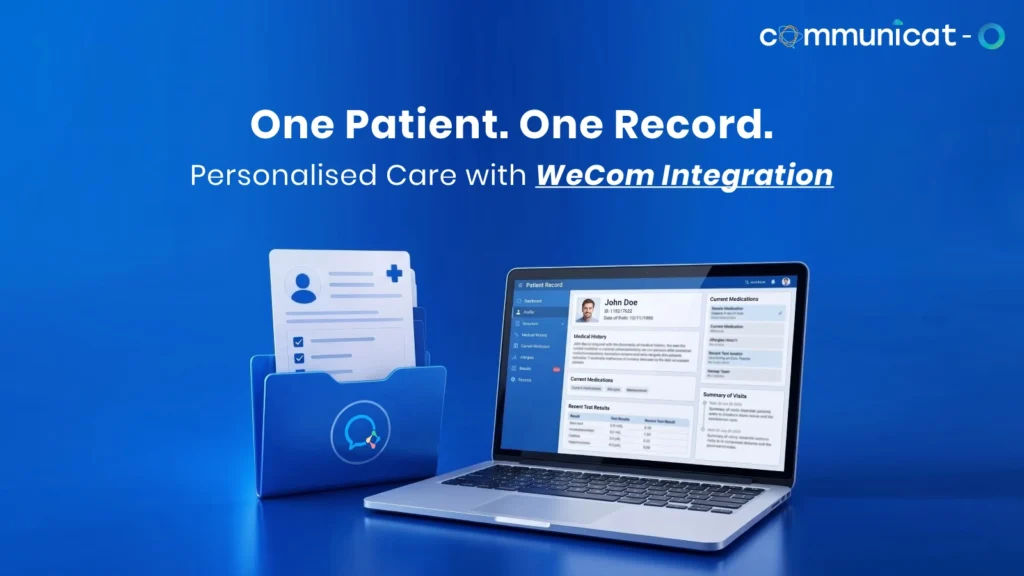
That gap, not the volume of messages, is what makes patient communication feel disjointed. A WeCom CRM System closes that gap by keeping every conversation, record, and follow-up connected to the same patient timeline, so healthcare teams can respond with context instead of guesswork.
It is especially important in outpatient and chronic care, where communication occurs in spurts throughout weeks or even months. Since that history is contained in the CRM database and not in disjointed conversations and sticky notes, it becomes possible to personalize communication without having to spend additional time searching for history.
Turning Everyday Conversations Into Usable Patient Context
Most patient messages contain more information than they first appear to. A question about medication timing can reveal a missed dose. A comment about transport can explain a pattern of late arrivals. On their own, these details fade after the chat window closes.
Integration of WeCom with CRM ensures the capturing of this information in structured patient data rather than allowing it to get lost. After the conversation has been linked to the patient’s data, the next person who accesses that patient data will be able to see:
- The last point of conversation and the timing
- Any pending queries or issues left unresolved
- Preferences, like preferred appointment time or preferred way of communication
- Points of follow-up or need for escalation
These are the points when integration of WeCom CRM software would pay off. This is not about capturing more data; this is about accessing the data that is already available.
A Small Scenario
A diabetic patient sends a message to the medical center asking for a rescheduling of a scheduled visit. When the reply is issued without the necessary CRM context, it is simply a message confirming the new schedule. However, when the CRM context is obtained from the previous conversation history, the coordinator realizes that the patient has failed to submit his/her blood glucose level report twice and asks him/her about it politely.
Knowing Where a Patient Actually Stands in Their Care Journey
Healthcare teams do not face one-time moments during patient encounters. They face an entire journey consisting of questions prior to consultation, post-consultation instructions, changes in medications, referral, and follow-up in the long run. Each step requires a different tone and type of follow-up.
A WeCom CRM System helps teams see that stage at a glance rather than reconstructing it from memory. A patient who just had a procedure needs recovery check-ins. A patient six months into a chronic condition program needs adherence support. Treating both the same way, with identical templated messages, tends to feel impersonal and can lead to disengagement.
Studies on missed appointments support this claim. One systematic review conducted in primary care found significant variations in missed appointment levels ranging from an average of 15%, with this variation being associated with how consistent patient follow-up and engagement has been. Stage-appropriate follow-up is among the practical handles available for healthcare professionals to make an impact on this level.
Making Follow-Ups Feel Relevant Instead of Routine
Generic follow-up messages get ignored. Follow-ups that reference something specific to the patient tend to get read and acted on. The difference usually comes down to whether the person sending the message has the right communication history in front of them.
With WeCom CRM integration in place, a care coordinator does not need to scroll through old chat exports to remember what was promised last time. The system surfaces it directly:
| Patient interaction signal | CRM context available | How the team can respond |
| Patient asks about test results twice in one week | Previous message shows results were sent but not opened | Resend results with a short summary, confirm receipt |
| Patient cancels an appointment last minute | History shows two prior late cancellations | Offer a more convenient time slot or a telehealth option |
| Patient mentions a side effect casually in chat | No prior side effect logged for this medication | Flag to the clinical team for a proper check-in |
| Long gap since last message | Care plan indicates a scheduled review was due | Send a proactive, personalised check-in rather than waiting |
None of these responses require guesswork. They come from reading the signal against what is already known about the patient, which is the core idea behind personalised communication at scale.
Coordinating Communication Across Teams Without Losing the Thread
Communication between patients is not limited to a single individual. The message could begin with the receptionist, be handed over to the nurse, and finally reach the hands of the specialist or even the biller. Every time a transfer is made, the context could be lost.
This is where WeCom CRM integration with existing Salesforce workflows becomes genuinely useful for healthcare teams rather than just convenient. When WeCom conversations connect with Salesforce records, the same patient thread stays visible to everyone who needs it, instead of living inside one person’s inbox. A nurse can pick up a conversation a receptionist started earlier that day without asking the patient to repeat themselves.
Team collaboration improves in a few concrete ways:
- Visibility helps reduce the number of duplicate messages that go out to the same patient.
- Handovers contain information in addition to the handover itself.
- Escalation to the clinician includes the entire history of communication rather than a summary of what was remembered.
- The manager has access to the response time and unresolved threads without contacting each employee separately.
Salesforce’s role here is mostly structural. It gives healthcare teams a familiar place to store patient records and care plans, while WeCom handles the messaging layer patients actually use day to day.
Using Timing Signals to Decide When and How to Reach Out
It should be noted that different patients desire to receive messages in different ways and with different frequencies. Some of them are willing to receive a message before an appointment in the morning while others would rather have a message delivered in the evening. With the help of the WeCom CRM System, the time when patients really read the message will be taken into account.
It allows for more efficient communication during the care transition process. Coordinated follow-up communication has a positive impact on outcomes.
The initiation of contacts with the local health care services prior to discharge and follow-up by phone to determine the needs of the patient has been found to have positive effects on the safety of the patient and his or her satisfaction, and bundled follow-up approaches were found to reduce the number of hospital readmissions in some studies.
Applied to messaging, the same principle holds: a well-timed, relevant message after a hospital stay or procedure does more for continuity of care than a generic reminder sent on a fixed schedule.
What Teams Typically Watch For
- Response patterns by time of day
- Which messages get read versus ignored
- How quickly a patient engages after a procedure or diagnosis
- Whether reminders are being missed consistently, which may signal a communication preference mismatch
A Typical Day With Connected Patient Communication
Consider a mid-sized outpatient clinic managing several hundred active patients across chronic care, post-surgical recovery, and routine check-ups. Messages arrive throughout the day across WeCom, some from patients confirming appointments, others asking follow-up questions, and a few reporting symptoms that need clinical attention.
First, it should be mentioned that different patients want to receive their messages in different ways and at different times. Some of them are ready to get their message before an appointment in the morning, while others prefer their message to be sent to them in the evening. The WeCom CRM System will help take into account the moment when patients actually read their message.
The use of this system makes the care transition process more effective. Coordinated follow-up communications have a positive effect on results.
Contacting the local healthcare services before discharge and following up with a call in order to find out what the patient needs is known to have a positive impact on the safety of the patient and his/her satisfaction, as well as bundling follow-up strategies was shown to reduce hospital admissions.
Conclusion
Personalised patient care rarely comes down to a single tool or feature. It comes from making sure that every message, every follow-up, and every handoff carries the context that came before it. A WeCom CRM System gives healthcare teams a practical way to hold onto that context instead of losing it between conversations, shifts, and departments.
For those teams who connect their messaging solutions with customer relationship management information, there is no need to work any harder. It is just the same kind of work being done but with fewer blind spots, which manifests itself through effective follow-ups and discussions where patients do not have to repeat themselves all the time. For health organizations looking for an appropriate way to coordinate their patients’ communication processes, it would be wise to start with the systems that are in place now.
FAQs
What does a WeCom CRM System really do for a healthcare team?
WeCom conversations can be easily connected to patient files, which gives staff the opportunity to review communication history, stage of treatment, and open follow-ups all in one place.
Does it make any decisions?
No. It is just a tool which enables effective organisation of communication and CRM data to give the staff proper context. Making decisions on patient’s health is still done by qualified healthcare professionals.
Can various departments use one single patient conversation?
Yes. Since they will all see the same connected communication system, then receptionists, nurses, and specialists can take part in the conversation without the need to ask patients about it again and again.
Do I need to use Salesforce for that?
Strictly speaking, no. But most healthcare providers already use Salesforce for keeping track of patients, so connecting WeCom messaging to those workflows is much more logical.
Will my patients see any changes?
Most likely yes – they will have less questions being asked twice, more relevant follow-ups, and quicker responses, since the staff already knows everything it needs to know to answer properly.
For more insights, updates, and expert tips, follow us on LinkedIn.