


The better a brand communicates with its target audience, the better are their chances to stand out in the competitive world where every day new brands are emerging with innovative ideas to beat each other.
This has made customers highly demanding in aspects of response times, reply to accuracy, and communication quality. They do not wait to wait too long to get answers. They want quick, personalized, and seamless interactions with the brand they are connecting to. Otherwise, they tend to switch to the competitors.
While plenty of organizations are adopting the game changing solution called CTI CRM Integration, there are still some which rely on disconnected communication systems where phone calls, customer records, and sales activities operate independently.
These businesses often face unsatisfied customers and missed opportunities due to such disconnected working systems.
Customer records remain scattered, agents are unaware about the case history and keep asking the details repetitively, and sales cycles are never fast.
Integration of telephone systems with customer relationship management systems helps businesses make their workflow smarter and more efficient, improve communication processes and provide great customer experience. What is more, implementation of Salesforce CTI integration solutions brings competitive edge to companies that use them.
Before Deciding to Implement, Understand CTI CRM Integration
CTI stands for Computer Telephony Integration, which allows you to connect your phone system with your CRM software. This will make it possible for you to run all operations without separating your phone activity from customer management.
A good CTI-CRM integration enables you to do the following:
- Call customers or clients using the CRM application
- Automatically record call information
- Gain access to client information
- Log interactions with the client
- Avoid tedious processes
- Communicate more efficiently
It will be easier for your employees as well as your clients.
Instead of spending their time on navigating between applications, they can spend it on nurturing relationships with the clients.
How Traditional Communication Methods Are Limiting Business Success?
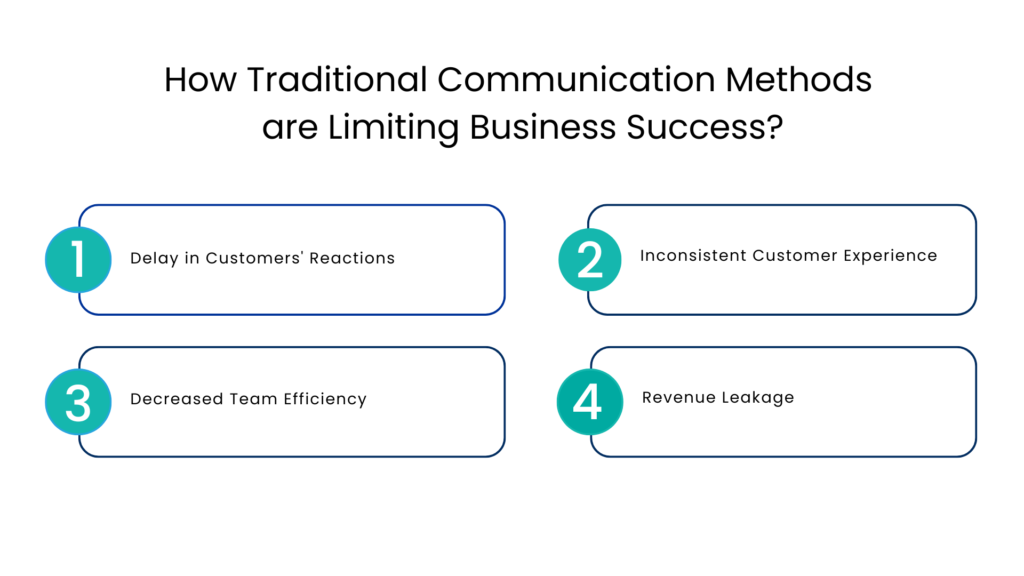
There is an alarming number of firms that have not updated their communication processes. Their phone calls are manually handled; their data about their customers is all over the place, and follow-ups mainly depend on their own memory.
The result is a number of operational problems.
Delay in Customers’ Reactions
Customers need instant attention. They will get upset if the agents take time to look for information before responding to their inquiries.
CTI-integration CRM provides all customer information during the incoming calls, enabling the agents to respond instantaneously and effectively.
Inconsistent Customer Experience
The lack of integrated systems will make customers enter the same information again and again, thus creating a negative customer experience.
Integrated systems allow every interaction to be tied up together, providing the agents with all relevant information from previous interactions.
Decreased Team Efficiency
Teams working in sales and support spend numerous hours every week on manual record updates, dialing numbers, and logging communication details.
With proper utilization of CTI for Salesforce CRM, these routine processes get automated, improving team efficiency.
Revenue Leakage
Lack of communication in workflow management might lead to missed opportunities for contacting customers and closing sales deals.
Companies implementing effective communication process management usually demonstrate higher productivity rates.
How CTI Integration CRM Helps to Achieve a Competitive Advantage?
Not even a single time, modern businesses can afford delayed communication as it can lead to a major loss.
One never knows how big an opportunity is, that might be hiding behind a simple inquiry. This is the reason why integrated communication systems are becoming non-negotiable in this world where AI is the driving force behind every workflow.
Faster Customer Engagement
Without speed, your customer engagement model is just a wasted expense.
Either you talk about the sales department or about the support one, speed cannot be compromised.
When there is a single dashboard that contains all call records, customer information, and communication history within the CRM, teams are empowered to respond immediately.
There is no time consumed in finding the details as everything is available right in front.
Due to this fast communication:
- Conversion rates increase
- Customers are satisfied
- Stronger customer retention is achieved
Smarter Customer Conversations
Agents tend to perform better when they have complete context of every call.
Whenever they receive a call or perform a call, they instantly know what the client is referring to. There is no requirement to use any other tool or switch to a different platform. This results in faster & smarter telephonic conversations.
With Salesforce CTI integration, employees can instantly access details like purchase history, preferences, support tickets, previous interactions, and other information to deliver a personalized communication experience that is not only relevant but smartly executed.
Enhanced Performance Monitoring
With the aid of integrated communication systems, managers have an easy time analyzing various aspects of their business operations such as performance of their customers and team interactions
This analysis helps managers make sound decisions and improve on their performance regularly.
The Future of CTI CRM Integration
Communication technology is witnessing a rapid evolution every day. New innovations, new technologies, new solutions, new methodologies; but the goal remains the same, to achieve seamless customer communication and to achieve maximum ROI.
In the future, brands that integrate CTI with CRM system are expected to become more intelligent and sustainable, because they get access to:
- Virtual assistants powered by AI technology
- Predictive analysis of the company’s communication channels
- Automation technology
- Omnichannel integration
- Customer behavior analysis
Conclusion
In today’s fast-paced business world, where customers’ demands grow higher each day, being stuck with extremely scattered methods of communication will only hamper the potential for growth and retention of loyal customers. In today’s era, sluggishness, repeated dialogues, lack of timely follow-ups, and inefficiency are no longer acceptable.
Salesforce Open CTI integration is what makes all the difference in terms of a significant business edge. This smart technology allows you to integrate telephony systems with CRMs in order to create a seamless communication process, enhance employee productivity, provide unique customer experience, and help with quicker decision-making.
As communication technologies continue developing, integrating advanced features such as AI, automation, and omnichannel capabilities, organizations who take the lead with CTI CRM integration will have an easier path to success.
FAQs
How does CTI integration CRM improve customer communication?
CTI integration CRM helps businesses provide faster and more personalized responses by giving agents instant access to customer records, call history, and interaction details during conversations.
How does Salesforce CTI integration improve team productivity?
Salesforce CTI integration reduces manual tasks like dialing numbers and updating records, allowing teams to focus more on customer engagement and sales activities.
What future technologies are influencing CTI CRM integration?
AI-powered virtual assistants, predictive analytics, automation, omnichannel communication, and customer behavior analysis are the key drivers behind shaping the future of CTI CRM integration.
Why is CTI CRM integration becoming important for modern businesses?
Modern customers expect quick and seamless communication. CTI CRM integration helps businesses meet these expectations while improving efficiency, decision-making, and overall customer experience.
How does CTI CRM integration reduce manual work?
CTI CRM integration automates repetitive tasks such as call logging, customer data updates, and activity tracking, helping teams save time and reduce human errors.
What features should businesses look for in CTI CRM integration solutions?
Businesses should look for features like automatic call logging, click-to-call functionality, real-time customer data access, analytics, intelligent call routing, and workflow automation.
For more insights, updates, and expert tips, follow us on LinkedIn.