

A customer messages your business on Viber at 11:42 PM asking about a refund. By nine the next morning, three people have touched that conversation. A night-shift agent replied once. A support lead saw it on a phone screen and forgot to log it. A sales rep has no idea it happened at all.
Nobody has the full picture of what was said or promised. Neither does the customer. That gap between “a message was sent” and “the right person actually knows about it” is the entire reason a Viber CRM platform exists. Not because Viber itself is unreliable. Because a chat app was never built to be a system of record.
Watch What Happens to One Message with Viber CRM Platform?
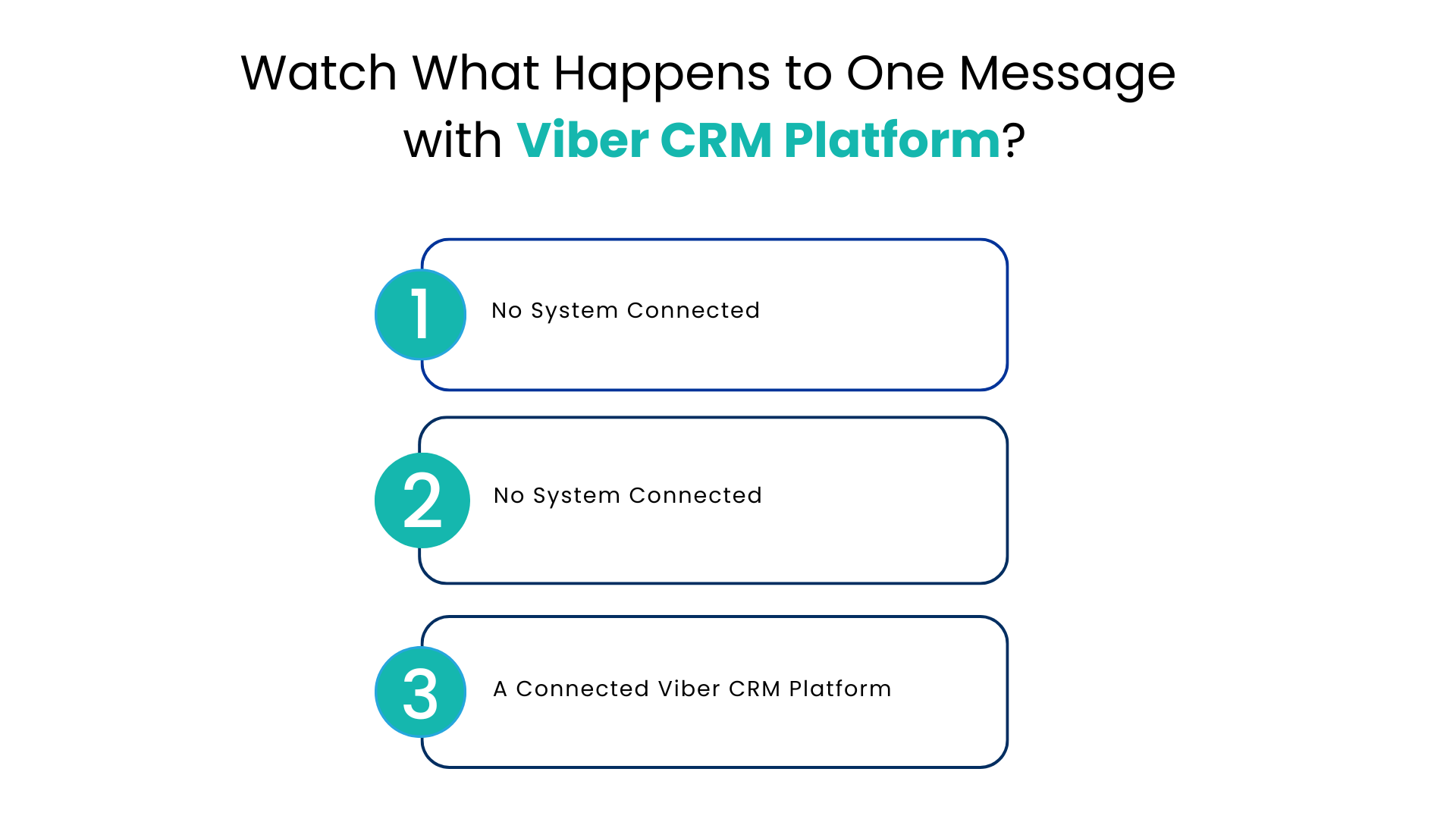
Trace the same customer reply through three common setups and the differences stop being theoretical.
No System Connected
The message reaches Viber. The representative responds via their phone.
- In case anyone else requires the context at some other time in future, they make the representative recall it or search the app manually.
- The CRM record is empty. There is nothing to track.
- The Message Gets Copied Manually by Someone
- After responding, the representative copies the summary of the message manually in CRM notes, generally after a few hours. The summary is:
- Shortened, lacks tone and details
Recalled and written manually
Left out completely in case of a busy shift. The record exists, but it’s a paraphrase written after the fact, not the actual conversation.
A Connected Viber CRM Platform
The message appears in the contact or case record within seconds of being sent. A reply sent from inside the CRM appears back in Viber instantly.
Anyone who opens that record six months later sees the exact exchange, not someone’s memory of it. Only this version holds up under real pressure: a compliance question, an angry customer, a rep who inherited an account mid-deal.
The Two-Minute Diagnostic
Before comparing vendors, check which Viber CRM setup your team is actually running today. Answer honestly:
- Is it possible for a manager to access the contact record and see the last conversation in Viber right away without anyone’s help?
- Is it possible for another agent to continue an open chat without the customer going through everything again?
- Is there anything automatically initiated by a reply in Viber, such as creating a task or populating fields?
In case the answer is negative, the cost is very real. It is represented in:
- Delayed follow-ups of unflagged messages
- Repeated questions from frustrated customers
- Stalled deals due to message not reaching the owner of the account
It also shows up in smaller ways. A support agent spends ten minutes scrolling a phone for context that should take ten seconds. A manager approves a refund based on a half-remembered summary instead of the customer’s actual words.
None of this requires a new headcount to fix. It requires the conversation to stop living in two places at once.
Inside a Team That Already Made the Switch
A mid-sized service business selling subscription hardware ran Viber purely as a support channel for two years. It was answered from a shared phone and logged nowhere.
The gaps showed up fast:
- Deals slipped when a customer asked a pricing question on Viber and sales never saw it
- Support agents reopened the same troubleshooting thread with returning customers who assumed they’d already explained the issue, sometimes twice in one week
- Agents lost close to an hour a day just piecing together history from memory or old chats, time that never showed up on any report
After connecting Viber directly to the CRM, the same conversation started doing three jobs at once:
- A support reply automatically updated the case status
- A pricing question from an existing customer triggered a task for their account owner instead of vanishing into a support queue
- Campaign replies landed against the contact record, so marketing could finally see which messages drove a response
None of this required a bigger team. It required the conversation to live in one place instead of three.
Where Does Your Customer Record Already Live
Picking a platform starts with one question: where does your customer record already live, and does the integration attach to it directly or sit next to it as a separate app you have to remember to check.
If Sales and Marketing Share One Tool
Businesses who are already using their pipeline and marketing lists through HubSpot may opt for a connector because Viber is not considered an inherent messaging service by HubSpot. The process of connecting Viber to HubSpot generally involves installing a connector application.
This fits smaller, sales-led teams well, since one database already covers everyone who needs to see a conversation. Most teams that want to integrate Viber with HubSpot can do it without custom development, using an existing connector rather than building one from scratch.
If Multiple Teams Touch the Same Customer
Larger organizations, especially where service, sales, and account management all work the same accounts, tend to already run Salesforce as the system of record.
A Viber integration built to sit natively inside Salesforce keeps every message attached to the case or opportunity directly. A service agent and an account manager end up reading the same thread instead of two different stories about the same customer.
Both options are valid. What is not valid is basing the Viber CRM implementation on whichever tool a certain group likes more, regardless of where the customer data should actually reside.
What the Data Actually Says About Speed
The pressure to close this gap isn’t just internal preference.
- HubSpot’s research on customer expectations found that 90% of customers rate an immediate reply as important, and most define immediate as ten minutes or less, a bar that’s nearly impossible to hit when messages sit outside the CRM waiting to be noticed
- Salesforce’s State of Sales research shows buyers increasingly expect real-time responses, and leads followed up within minutes convert at meaningfully higher rates than those contacted hours later
A missed Viber message isn’t just a service gap. It’s a quiet, recurring hit to the pipeline that never shows up as one dramatic failure, just a slow leak, the kind that’s easy to ignore for months because no single missed message ever looks like the reason a quarter came in soft.
Things to Keep in Mind Before You Sign Anything
Run a short trial with real conversations, not a sales demo. Check three things:
- Speed: Is the message really appearing in the logs within seconds, or does “real time” equate to a few minutes with syncing time?
- Collaboration: Do two people have the ability to work in the same conversation without stepping on one another’s toes by repeating or contradicting their colleague in the midst of a conversation?
- Upkeep: Once the trial period is done, do you require a developer to maintain your connectivity, or will it stand on its own?
Any Viber CRM software that struggles with these three in a live trial will struggle the same way at full volume, usually right when a busy week makes the gap most expensive.
FAQs
What is a Viber CRM platform?
An app that ties Viber messaging directly into your CRM, making all your Viber messages automatically log against the appropriate contact/case, not staying isolated in the messenger application.
Is it possible to connect Viber to HubSpot without developing anything new?
In most cases, yes, via a dedicated connector app, as Viber is not considered by default to be a native channel for HubSpot.
Does Salesforce have native integration with Viber?
No. Most organizations install Viber CRM integration especially designed for Salesforce in order to tie all messages to leads/cases/opportunities automatically.
So, what makes the difference between these two ways of using the messenger?
Viber Business app maintains all conversations in Viber itself. The connected platform takes the conversation from there and pushes it into your CRM system instantly.
Is this kind of tool really useful for smaller teams, or only for big businesses?
Often small businesses see immediate benefit from it, as one missed message equals one client lost, and there are not many employees around who can make up for it.
For more insights, updates, and expert tips, follow us on LinkedIn.