

Email was built for a different era. It made sense when customers checked inboxes twice a day and response times were measured in hours. That era is over.
Today’s customers expect instant, conversational replies. The communication happens in the same fashion as one would text their friends and wait for an immediate reply. It is through WhatsApp where over two billion people actively engage, which makes them beat email in terms of reach and efficiency of replies.
When we integrate artificial intelligence into the mix, we will have automated replies, intelligent lead scoring, and availability around the clock all while keeping the size of our team intact. In this article, we will discuss why WhatsApp integration with artificial intelligence outdoes emails for customer communication.
From Email-Based Engagement to Messaging-Based Communications
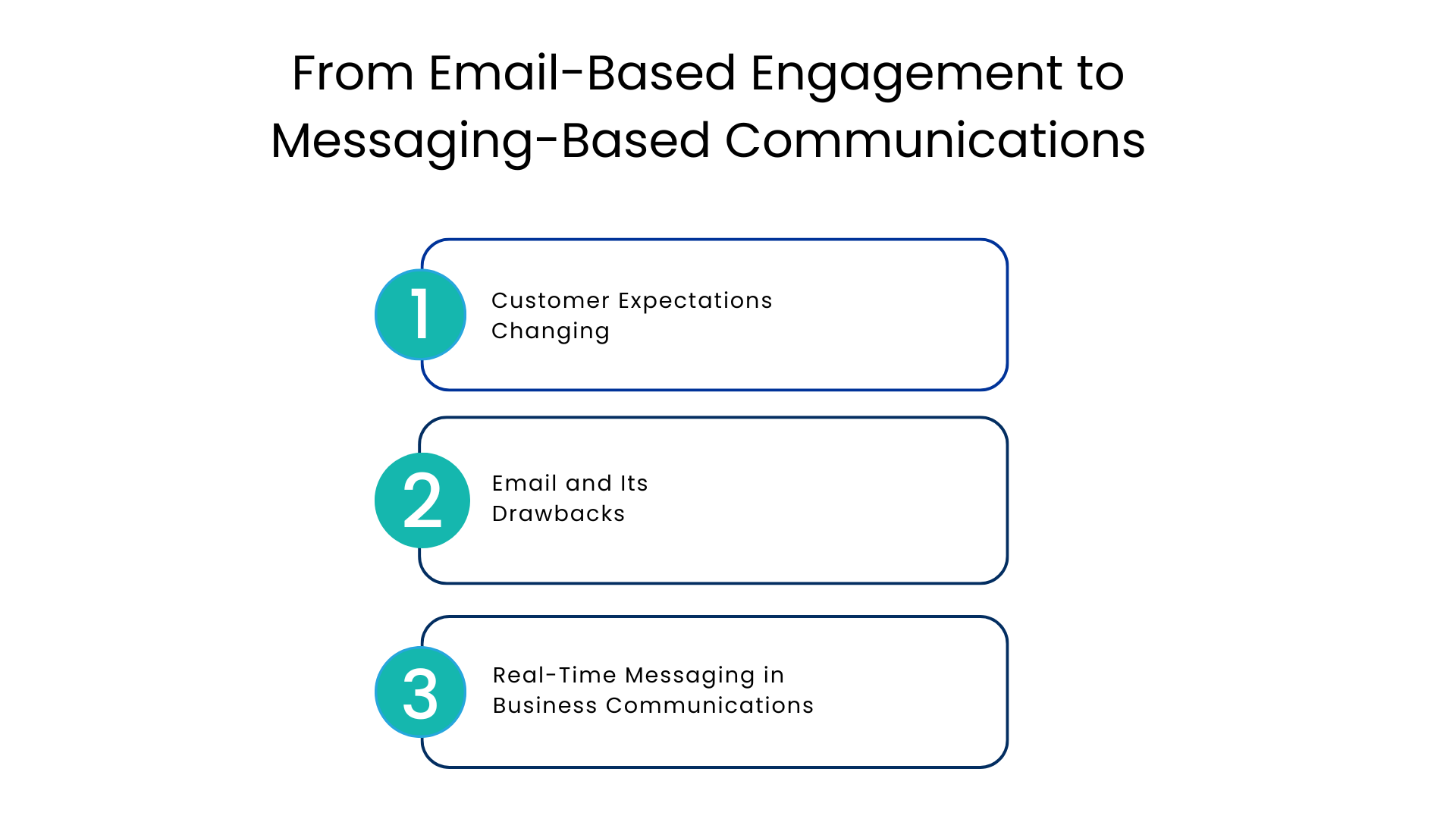
Customer Expectations Changing
They don’t assume the D2C business works on the same schedule anymore; they are expecting immediate responses, whether sending a message in the middle of the night or in broad daylight. While a conversion rate for a company replying to an inquiry in two minutes via WhatsApp is incomparable to an email response the following morning, even when delivered before business hours start.
Email and Its Drawbacks
On average, professionals receive over 120 emails each day. Even for marketing emails, the average open rate doesn’t usually exceed 30 percent. But with WhatsApp, the situation is completely different as the average open rate is more than 90 percent. What is more, almost all of them are opened right away, which cannot be said about the rest of communications used in business today.
Real-Time Messaging in Business Communications
In general, companies across industries choose WhatsApp over email simply because their customers use it actively.
What does WhatsApp Integration do?
It allows WhatsApp Business communication to be linked with your CRM, so that the communications can be monitored and managed along with all other forms of customer interaction.
This means the following:
- Messages come through in the CRM just like phone calls and emails
- Customer details get updated depending on the activity in the conversation
- Agents answer WhatsApp messages from within the CRM itself
- Tasks get triggered depending on the content of the message and the status of the customer
- All interactions get logged in one customer timeline
A WhatsApp Business CRM solution eliminates any gap between the places where customers interact and where business information exists.
Why Does AI Makes WhatsApp More Powerful Than Email?
Instant Response and Round-the-Clock Availability
The instant responses are achieved using AI-based autoreplies. The customer seeking information about availability at 11 p.m. receives an almost immediate response. The dialogue is kept warm until the customer services team picks it up later. As opposed to emails, which may lose the client after delay, WhatsApp with AI allows for round-the-clock engagement.
AI-Based Lead Categorization and Routing
The AI system identifies and sorts leads into different categories based on their intentions and priorities. Urgent leads are routed immediately to a live agent. The lower priority leads are channeled into the nurturing pipeline. This means that the sales team interacts exclusively with leads with high chances of closing deals.
Service Automation & Custom Messaging
All frequently asked questions, appointment confirmation, order updates, and others can be automated through chatbots. The integration with the CRM system ensures that customer information is integrated into all conversations. As a result, automated WhatsApp conversations are customized to meet individual needs.
Business Benefits of the Best CRM with Whatsapp
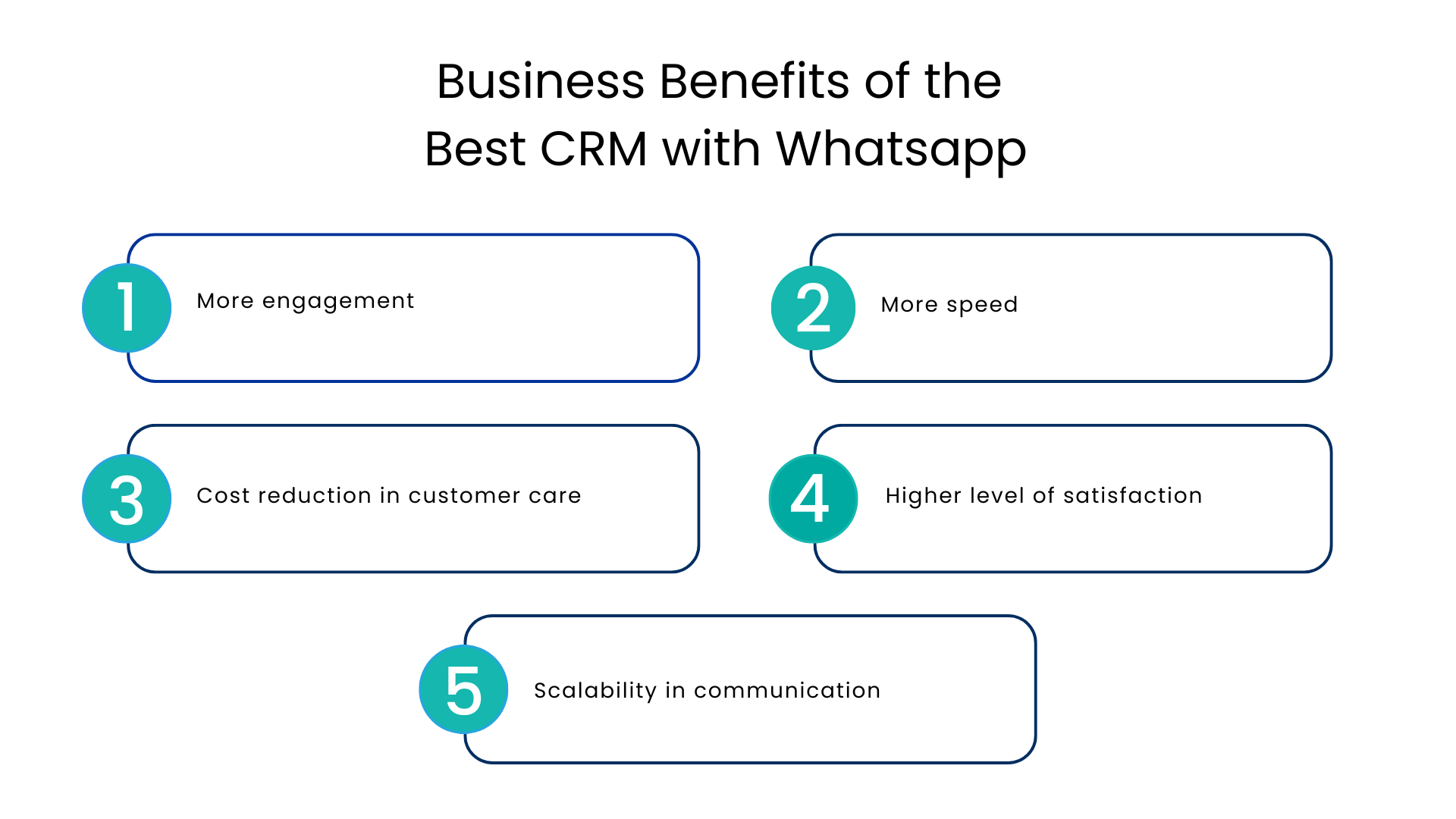
The main advantages of integrating WhatsApp with CRM and AI for business include:
- More engagement – open rate over 90% versus 20-30% for email marketing
- More speed – instant lead response on a large scale
- Cost reduction in customer care – automated answers without additional staffing
- Higher level of satisfaction – faster problem solving with conversational interaction
- Scalability in communication – more messages while keeping the same team size
How WhatsApp Salesforce CRM Creates a Unified Customer Journey?
Centralized Conversations
Each WhatsApp message that goes through the system gets saved on the CRM linked to the customer’s profile. The agent will have access to all of the customer’s conversations including telephone calls, emails, and past purchase transactions. Both the sales agent and support agent get access to the same information.
Automated Follow-Ups and Workflow
The CRM triggers WhatsApp follow-ups based on customer behavior automatically. A lead who has not responded in three days gets a check-in message. A shipped order triggers a tracking update. A completed consultation prompts a feedback request. These happen without manual scheduling.
Sales and Service Alignment
When sales and support teams operate from the same CRM-connected WhatsApp channel, handoffs are seamless. A customer moving from pre-sale enquiry to post-sale support does not need to re-explain their situation. The full record follows them through every stage.
Why Email Alone Is No Longer Enough
| Capability | WhatsApp + AI | |
| Average open rate | 20-30% | 90%+ |
| Response time | Hours to days | Minutes to seconds |
| Personalization | Template-based | CRM-driven, dynamic |
| Automation | Basic sequences | Intelligent, context-aware |
| Customer visibility | Limited | Full CRM-connected history |
| Conversational experience | One-way broadcast | Two-way, real-time dialogue |
| Conversion impact | Low urgency | High intent, faster decisions |
Email still has a role for formal documentation and long-form content. But for real-time engagement, lead nurturing, and support, it cannot compete with what a WhatsApp integration CRM delivers.
Advantages of Salesforce WhatsApp CRM in Customer Engagement
The Salesforce WhatsApp business solution allows WhatsApp messaging to be integrated directly into Salesforce so that agents never have to switch from their CRM.
- Workflows: A new message leads to a new lead CRM record being created. A keyword initiates routing to an expert agent. A response schedules follow-ups based on the customer’s feedback.
- Visibility and reporting: Sales managers get full visibility into all current WhatsApp messaging activities right from the Salesforce dashboard. Reporting on response times, open chats, and agent performance becomes automated.
- Customer experience: Every single conversation via WhatsApp messaging gets tracked in Salesforce as part of the overall customer journey.
Features of the Best CRM Solution with WhatsApp
- Unified Inbox: WhatsApp integration across all channels through one view of Salesforce.
- Artificial intelligence: Includes automation such as automatic responses, lead scoring, intelligent routing, etc.
- Routing Conversations: Conversation routing through rules-based approaches.
- Analytics & Reporting: Response times, resolutions, and performance by channel in Salesforce dashboards.
- Natively integrated within Salesforce: All data and functionality directly in Salesforce; no need to synchronize data between tools.
- Messaging across multiple channels: Extend the same CRM solution used for WhatsApp Business into other channels without any additional software.
CRM for WhatsApp working natively within Salesforce solves the problem of data silos inherent to multichannel communication.
Conclusion
Email is not going away, but it has become too slow and impersonal to engage customers looking for immediate conversations. WhatsApp AI is the solution to the limitations of email as it can offer real-time communication, automation, customer context, and even track conversions.
For companies that use Salesforce, integrating WhatsApp in their system will make each communication a part of the customer record while streamlining follow-ups and providing everyone with a consolidated view.
FAQs
What is WhatsApp integration?
WhatsApp integration integrates WhatsApp Business messaging with a CRM such that conversations can be recorded, managed, and automated along with all other customer information in the CRM system.
How does WhatsApp integration CRM work?
WhatsApp Business messaging is linked to the CRM system such that new messages create customer record information automatically. Messages from customers are handled from the CRM dashboard itself, workflows are triggered from message activities, and all interactions are saved to the customer interaction timeline. This is possible using Communicat-O within Salesforce natively.
Why is WhatsApp more effective than email for customer communication?
The open rate of WhatsApp messages exceeds 90 percent whereas emails get an open rate of only 20 to 30 percent and that too within minutes of being delivered. Also, the conversational format ensures faster replies than email messages.
Is it possible for AI to automate WhatsApp interactions with customers?
Yes. AI helps in automatically replying at once, screening leads, routing the conversation to the right agent, setting up follow-up messages, and responding to any frequently asked questions round-the-clock. With its integration with CRM, replies can be made even more personalized based on the customer.
Why is the Integration of Salesforce and WhatsApp useful in offering a better customer experience?
The integration provides agents with full context regarding customers when messaging, including their history, opportunities, and transactions. The process becomes very fast and consistent due to automation, and all conversations are tracked in real-time by the manager.
For more insights, updates, and expert tips, follow us on LinkedIn.